
On today’s mixing consoles, we are spoiled by the luxury of infinite choice. You can pan a hi-hat to 14 percent left, a rhythm guitar to 62 percent right, and a synth pad to 33 percent. While this granularity feels like freedom, it often leads to unnecessary decision fatigue and more problematic, a messy mix. When every element occupies a slightly different point in the stereo field, the mix can lose its focus and impact.
LCR mixing is a disciplined approach that strips away these incremental choices, leaving you with only three possible positions: Hard Left, Center, and Hard Right. By embracing this constraint, you force yourself to solve frequency conflicts at their core, resulting in a mix that sounds wider, cleaner, and more professional.
The Power of Extremes
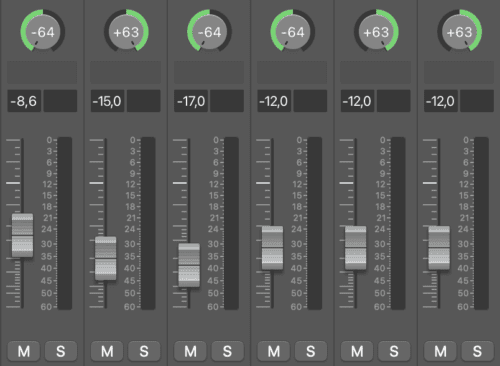
When you pan an instrument 100 percent to one side, you are clearing out the inner stereo field. This creates real estate for the most important elements of your track: the kick, snare, bass, and lead vocals: to sit right in the center without competition.
In a standard mix where elements are scattered at 20 to 50 percent, the center becomes crowded with side-panned instruments. By pushing those elements all the way to the edges, you emphasize the contrast between the solid core of the song and the wide, immersive sound surrounding it.
Forcing Better Decisions
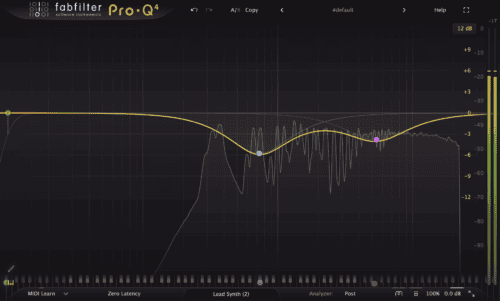
One of the benefits of LCR mixing is that it highlights masking issues immediately. In a traditional mix, you might pan a guitar to 40 percent left to get it away from the vocal. This is often a Band-Aid fix for a frequency conflict. In an LCR workflow, you are forced to use EQ to carve out space or adjust the volume to fit the guitar in the mix.
This discipline ensures that every instrument has its own dedicated frequency pocket and spacial position. When you eventually listen to your mix in mono, you will find it sounds more balanced because you fixed the underlying tonal issues rather than hiding them with panning.
How to Implement LCR Mixing in Your Workflow
If you want to try this technique in your next mix, follow these steps:
- Establish the Anchor: Keep your foundational elements in the Center. This almost always includes the kick drum, the snare, the bass, and the primary lead vocal. These provide the weight of the track.
- The Binary Choice: For every other element, decide if it belongs in the Center or on the edges. If you have two similar elements, such as two rhythm guitars or two synth layers, pan them Hard Left and Hard Right to create an immediate sense of width.
- Fill In The Gaps: While you want to place the vast majority left right and center, it is good practise to also have one or two elements halfway as well to fill that gap e.g. toms or stereo piano parts. This helps you connect the sides to the centre, creating a nice, evenly spread stereo image while still enjoying the benefits of LCR mixing.
- Manage the Build-up: Since you only have two side channels, multiple instruments will be stacked on top of each other at 100 percent Left or Right. This is where you could consider cutting with EQ filters to give each instrument their own pocket. If the acoustic guitar and the rhythm synth are both Hard Right, you can use EQ to ensure they aren’t fighting for the same frequencies.
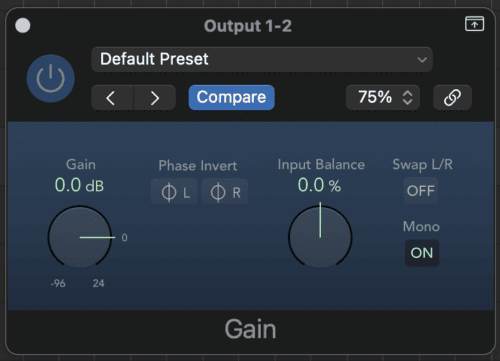
- Optional: Check the Sum: Periodically flip your master bus to mono. Because of the LCR discipline, you should hear a clear hierarchy where the vocal stays on top and the side instruments tucked behind it.
Closing Takeaway
LCR mixing is not just a vintage technique from the days of limited mixing consoles. By limiting your panning options, you stop hiding mix problems and start solving them through better EQ decisions and improved volume balancing. The result is a mix that feels wider and clearer, and stand out in Spotify playlists.