

Great tracks do not just rock all the way through. They breathe, they push, and they pull. Tension and release is the emotional heartbeat of any memorable record. If your mixes feel stagnant or your arrangements are getting skipped on Spotify playlists, you are likely missing this dynamic. Building anticipation makes the eventual payoff feel massive.
Here are five ways to inject tension and release into your songs:
1. Spatial Constriction and Expansion
A massive chorus hits hardest when it breaks out of a tiny box. You can manipulate the stereo field before the chorus in order to make the chorus feel wider.
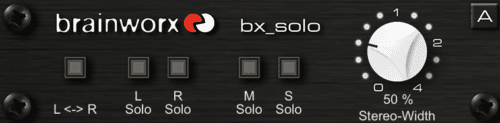
- Automate your stereo bus with a width plugin like bx_solo (free) to sum the track toward mono during the build section.
- Alternatively you can narrow the panning of your rhythm guitars or synths inward by a significant margin.
- On the downbeat of the chorus, bypass the width restriction or snap the panning back to the extreme left and right.
2. The Absolute Void
Sometimes the most aggressive way to build tension is to offer absolutely nothing. In an era of heavily compressed and walled up masters, true silence is shocking. Listeners always react physically to a sudden drop in energy.
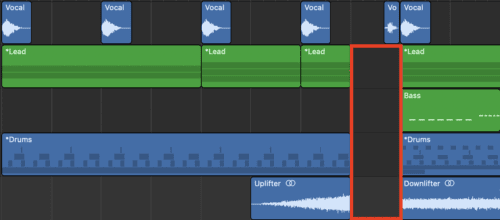
- Highlight all regions across your entire session for the last beat of your build section.
- Cut and delete everything to create a literal gap of absolute silence.
- Make sure the natural reverb tails cut off entirely in this section, using automation.
3. Sub-Frequency Starvation
Bass is the physical anchor of most music. By stripping the low frequencies out of your mix right before a drop, you keep the rest of the track feeling close while the floor drops out from underneath the listener.
- Group your kick and sub-bass tracks together into a dedicated low frequency bus (or do the following two steps on both tracks).
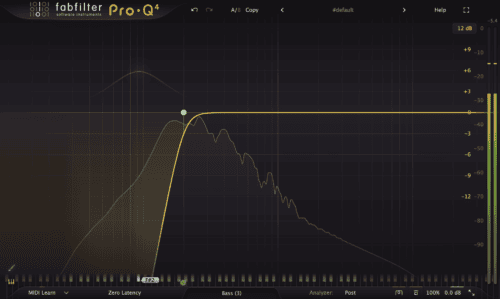
- Insert an equalizer/filter and automate a high pass filter sweeping from twenty hertz up to around two hundred hertz over the course of the build section.
- Bypass the equalizer/filter the exact moment the new section hits to literally “drop the bass”.
4. Rhythmic Suffocation
Groove relies on breathing room. When you take that space away, you build a frantic energy. This works specifically well for electronic artists collaborating with vocalists or modern rock bands alike.
- Identify a busy shaker, hi hat, or percussion loop in your arrangement.
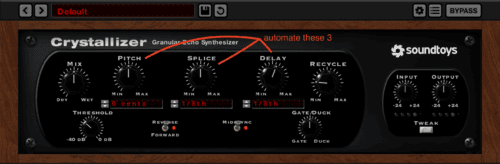
- Automate a rhythmic gate, beat repeater or other fun rhythmic manipulation plugin to increase its subdivision.
- Remove the percussion completely for the final beat before the transition to leave the listener suspended in midair.
5. The Infinite Reverb Wash
Reverb usually provides depth, but extreme automation transforms it into a psychological tool. Washing out a lead element in a massive hall blurs the rhythm and pushes the listener away from the groove, making the snap back to a dry signal feel remarkable.
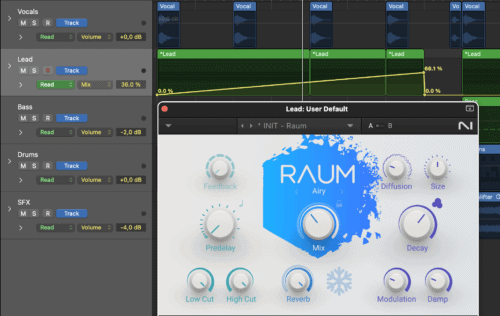
- Add a reverb plugin to your lead element’s track and set it to a big hall or plate algorithm featuring a five to ten second decay time.
- Automate the track to slowly increase the wet mix from zero, over the final eight bars of your build section until the original sound is nearly drowned out by the reflections.
- Snap the wet mix back to zero exactly on the downbeat of the new section to instantly pull the listener out of the waze and into the drop.
Closing Takeaway
Creating tension and release is all about contrast. When you actively manipulate these extremes in your workflow, your productions transform from flat loops into captivating journeys.