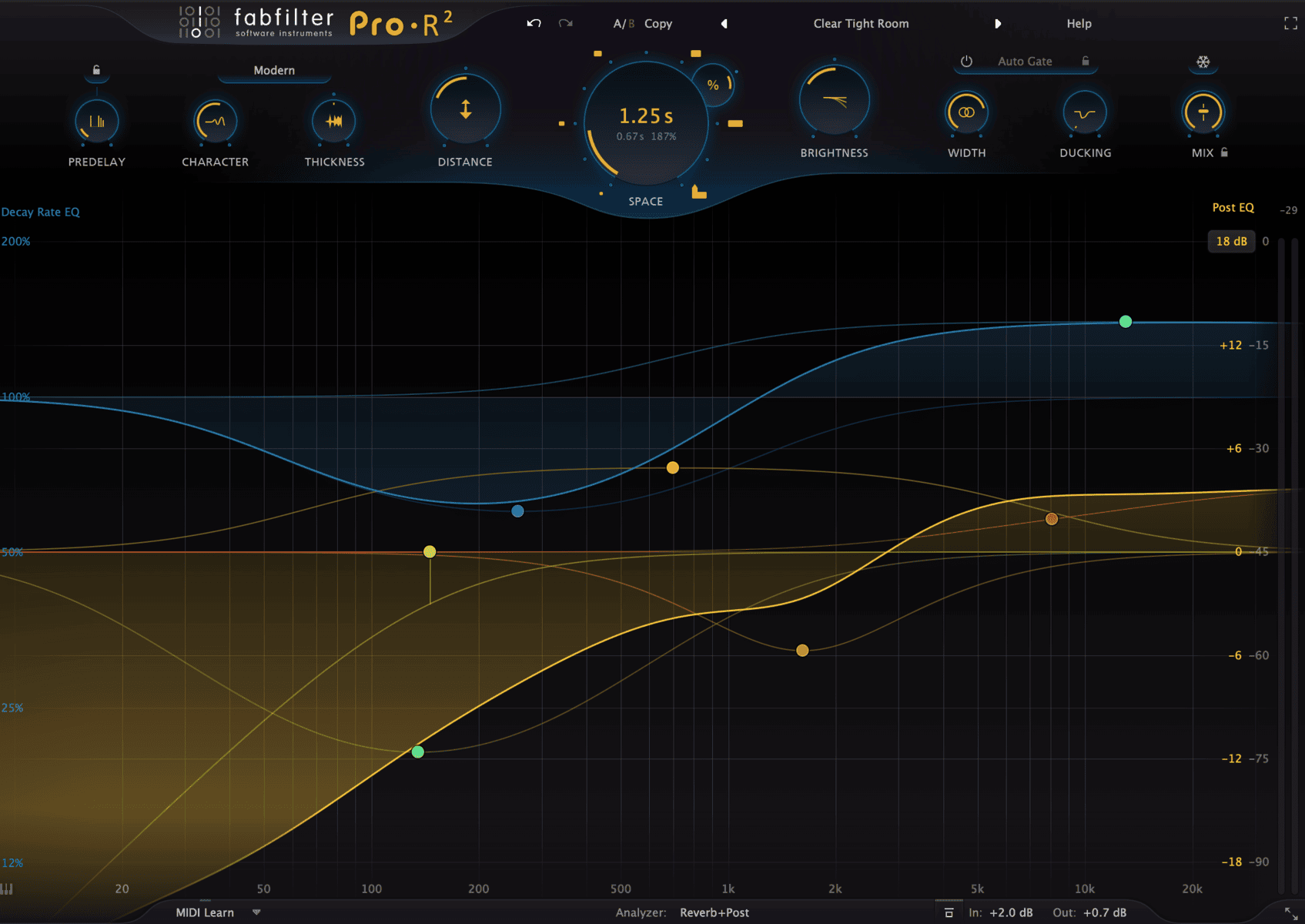


In mixing, we often speak about left/right (width) and top/bottom (frequency), but the “Z-axis” (front/back) is often overlooked. Today, we’ll discuss how to push sounds to the background in a mix, creating 3D depth without the blurriness caused by excessive reverb.
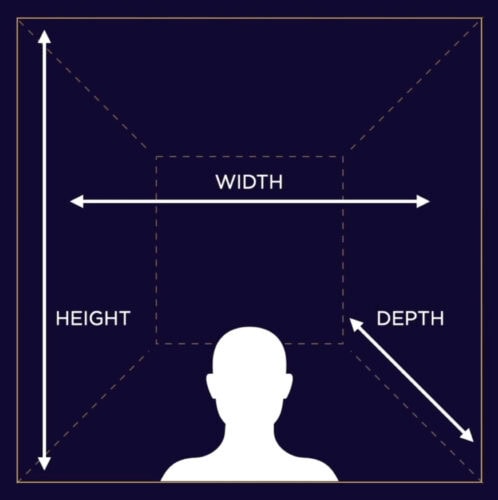
The Physics of Distance
To simulate depth, you have to act like a physicist. In the real world, sound waves change as they travel through space to your ear. It’s not just about the reflections (reverb) that are added; It’s also about what the air does to the sound itself.
When a sound is far away, three things happen:
- It softens.
- The high frequencies are absorbed.
- The sharp impact of the sound (transients) is softened.
If you can mimic these three phenomena with gain, EQ, and dynamics processing, you can trick the listener into perceiving distance before you even insert a reverb plugin.
Going The Distance
To make this practical for your next mixing session, I’ll share with you a three-step process that helps you place each element behind the lead vocal or main instrument without cluttering the stereo image:
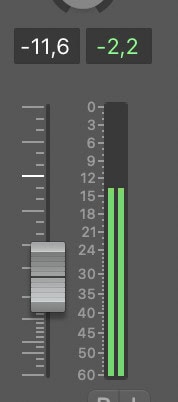
- Volume (Loudness) It might sound obvious, but it’s the most powerful indicator of depth. Lower the fader until the element feels like a texture instead of a feature.

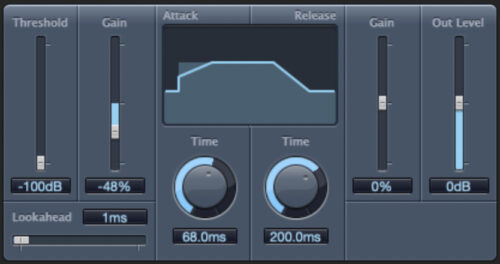
- Softening (Transients) A sound right next to your ear has a sharp attack. Distance softens that attack. Use a transient shaper to reduce the attack, or use a compressor with a very fast attack time to flatten the initial transient. By “flattening” the peak, the urgency of the sound disappears, signaling to the brain that it is distant.

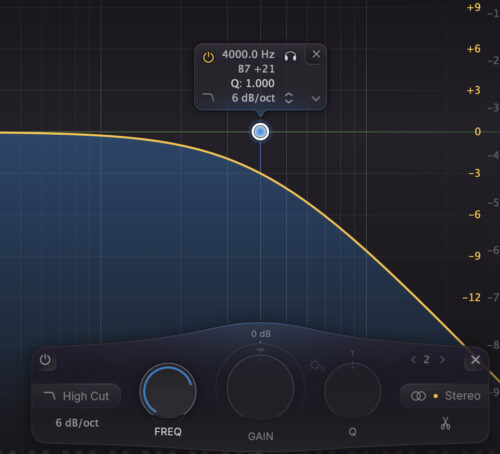
- EQ (The “Air” Cutoff) High frequencies decay faster than low frequencies over distance. To push a sound back, use a subtle low-pass filter. Cut frequencies above 3 kHz to 5 kHz. The darker the sound, the further away it sounds.

Why this is important
By working with this method instead of reverb, you give the mix more room to breathe. Reverb tails contain complex information that limits not only the clarity of a mix but also the maximum volume your mix can be mastered to before it distorts. By defining your Z-axis with EQ, volume, and transient shaping, you keep the mix powerful and open.
Learn the Art of Mixing
Do you want to upgrade your mixing skills further? We’re about to launch our most comprehensive mixing program to date. If you’re not ready to do The Reverse Engineer yet (our flagship program), but you want to learn how to craft professional mixes that hit as hard emotionally as they do sonically, The Art of Mixing program might be just right for you. We’re going live this Friday (Feb 13th) at 8am Pacific / 11am Eastern / 4pm UK Time to reveal all the details. Register for the live webinar here to learn more!