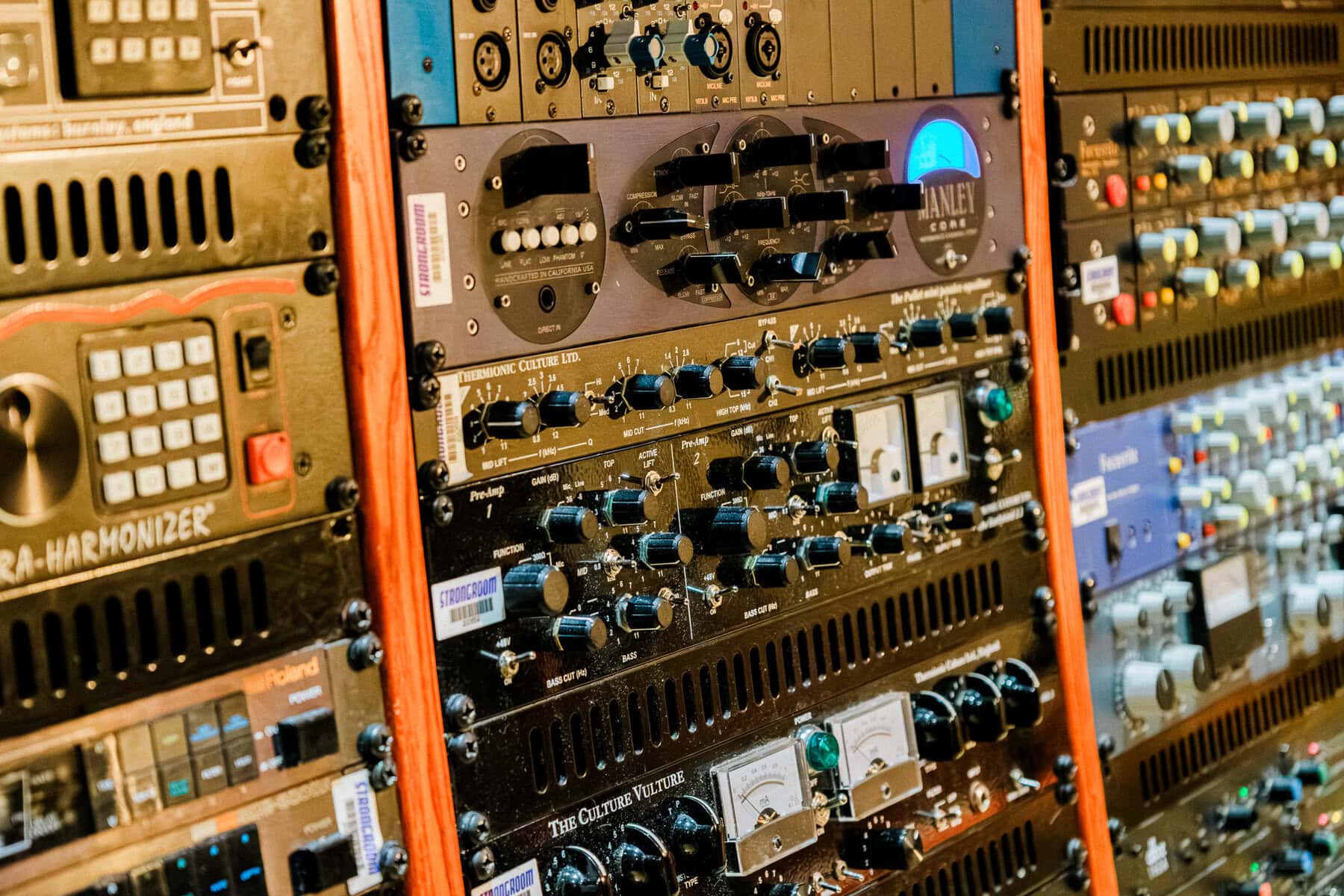

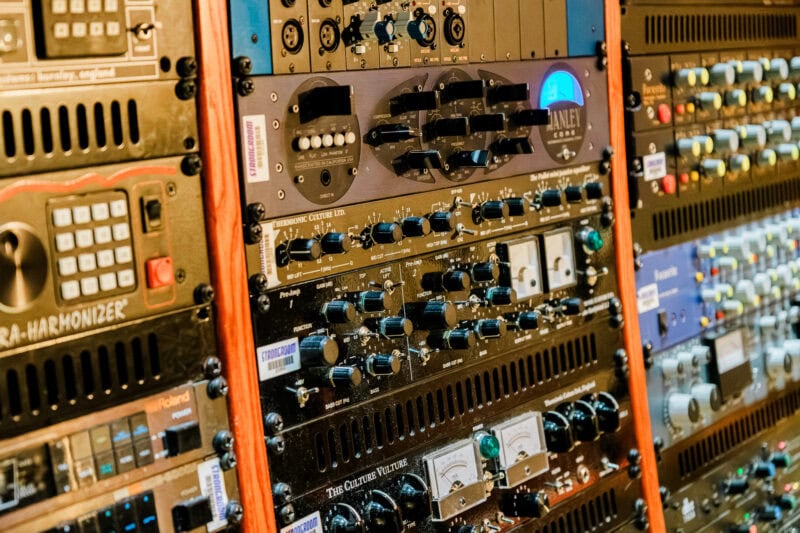
Today, we’re going to look at an amazing tone-shaping tool for your vocals. The pre-amp.
While originally designed to simply get your mic input up to line level, treating your preamp as just a volume knob is a missed opportunity. A preamp is your first equalizer and your first compressor rolled into one. It dictates how the transients behave, how the harmonic distortion builds up, and how the vocal will ultimately sit in your final mix.
Producers and mixing engineers rely on a specific handful of preamp circuits to achieve the sounds we’ve all come to love. Understanding the characteristics of each will help you choose the right tool for every vocal session. Let’s dive into the specific sounds of the legendary preamps that shaped the sound of both modern and vintage records.
The Neve Sound: Weight and Authority
Neve preamps, like the famous 1073 circuit, use heavy transformers that add physical weight and dense low-frequency harmonic distortion. If you have a vocalist who sounds a bit thin, pushing them through a Neve will give the voice a thick and grounded character.

The API Sound: Midrange Punch and Speed
Known primarily for the 512c, API preamps have an incredibly fast transient response. They capture the details of a performance while pushing the midrange forward. When you need a vocal to bite through a dense wall of distorted guitars, API is the tool to use. It adds a tight, percussive energy that is perfect for pop-punk and rock.

The Avalon Sound: Expensive Air and Clarity
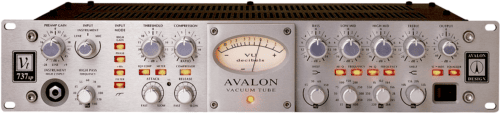
Avalon preamps, most notably the VT-737sp, offer something completely different. Instead of adding thick saturation, an Avalon circuit lifts the high frequencies and imparts a silky, expensive-sounding air to the vocal.
The Universal Audio Sound: Vintage Tube Warmth
When you want vintage character, you reach for a tube preamp like the Universal Audio 610. Unlike solid-state gear, tube preamps respond to volume by rounding off the sharp edges and introducing a fuzzy, warm saturation. This imparts a nostalgic 1960s character to the recording.

The Closing Takeaway
Choosing the right vocal preamp is your first and most important mixing decision. By understanding the distinct tonal characteristics of Neve, API, Avalon, and Universal Audio, you can build your vocal tone from the ground up to make your entire vocal production workflow much easier.