

Have you ever listened to your mix and felt the energy suddenly drop from one section to another? Today, we’ll look into why that is and how to fix it!
So what is happening here? More often than not, your lead element in section one is no longer present in section two. Listeners subconsciously lock onto one main sound at a time. We can call this the anchor element.
When that anchor element disappears, the brain expects something else to take its place immediately. If nothing steps up to the stage, the mix loses momentum, and the listener might skip the track. Nailing the handoff between anchor elements is what separates an amateur bedroom track from a professional release.
Finding the Focal Point
Every section of your song should have an anchor element. In a standard pop verse, the anchor element is almost always the lead vocal. In a heavy EDM drop, it might be the distorted bassline or a synth melody. During an instrumental bridge, a wailing guitar or a sparkling arpeggiator takes the spotlight. The anchor element is what captures the listener’s attention.

Your job as a mixing engineer is to identify these anchor elements and make sure they never step on each other. If two elements simultaneously fight for the anchor position, the mix sounds cluttered and confusing. On the flipside, if a section does not have a clear anchor element, the energy will drop, and the listener will be confused.
Passing the Baton
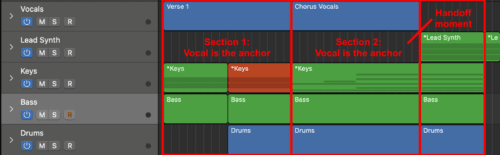
Think of your mix like a competitive relay race. The vocal is running the first leg. When the chorus ends and the vocal stops, the singer must hand the baton to the next instrument.
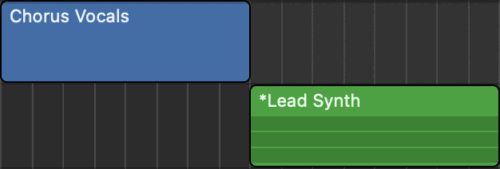
If the synth lead taking over is mixed too quietly in the background, the baton drops to the floor. The energy dies instantly. The trick is to match the perceived loudness of the new anchor to the previous anchor. The listener should not have to lean in or turn up the volume to hear the new focal point.
How to Execute the Perfect Relay
Here is how you can achieve a flawless handoff:
- Identify transition points: Find the moment when the current anchor stops (and the new one begins).

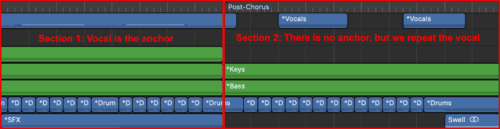
- Ensure there is a new anchor: Identify a clear focal point after the transition. When the section lacks a new anchor, you can use spot effects (sometimes called “ear candy” or “incidental effects”). For example, you could take the very last word of the vocal phrase in the previous section or the last note of the guitar riff and send only that last note to a heavy delay or massive reverb so it echoes out into the empty space.

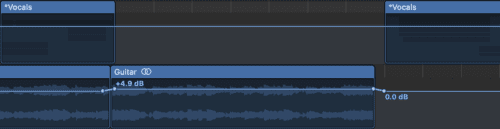
- Adjust the difference in perceived loudness: Use an insert gain plugin to automate volume and match the loudness of the new anchor to the previous anchor element. We do this using your ears rather than meters, because we want to match the emotional intensity, which we can’t read on a screen.
- Repeat these steps: Go through every section of the song, and make sure there is always a clear focal point.
Keep the Momentum Alive
Mixing is not just about balancing static levels on your screen. It is about directing the attention of your listener from the first second to the final note. By identifying your anchor elements and confidently passing the baton between them, your tracks will maintain a constant, professional energy. This simple technique keeps clients coming back for more and ensures your songs stand up against top commercial releases.