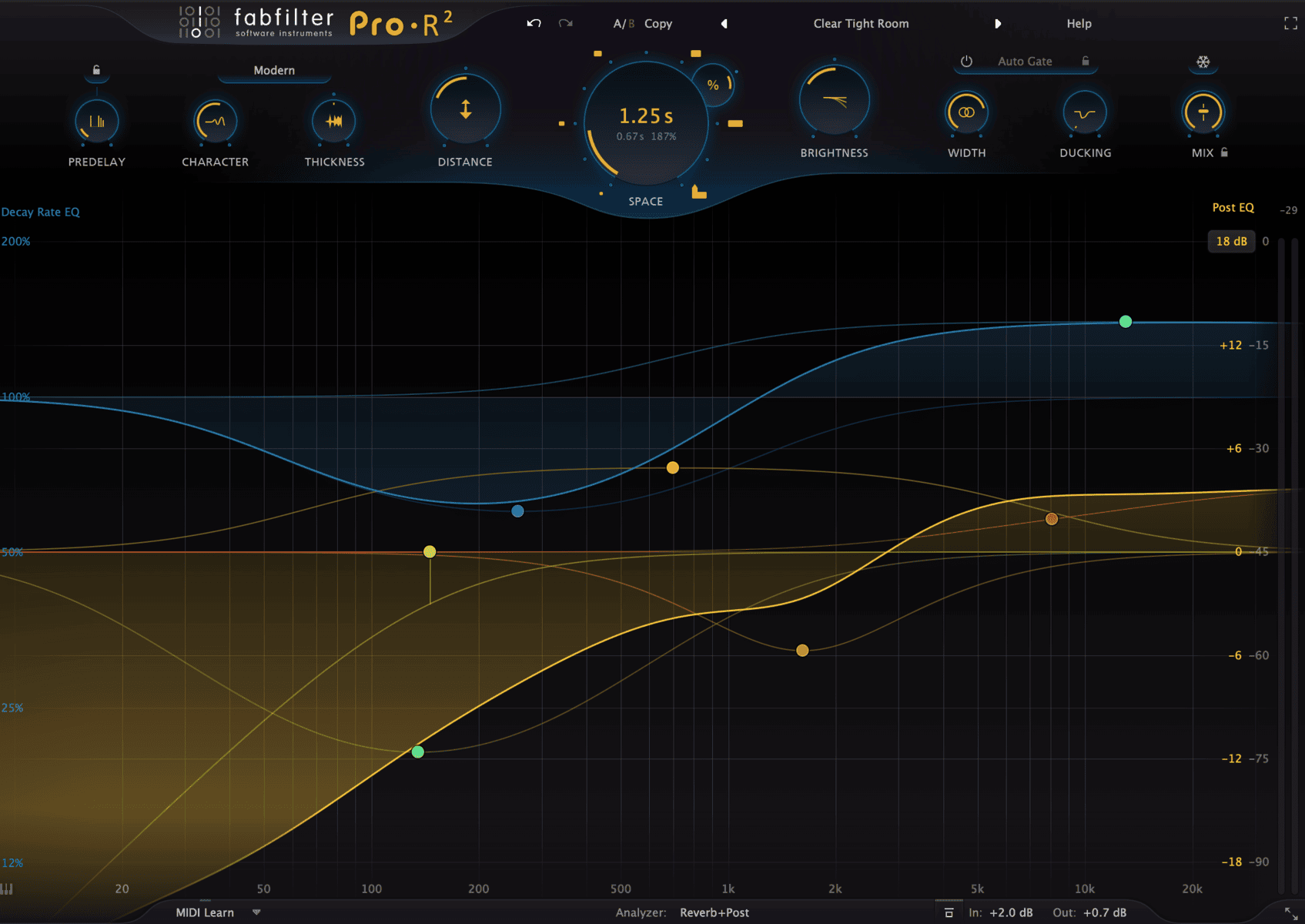


Professional productions often sound huge because the arrangements are actually quite small… Don’t believe me? Today, we’ll look into the “Delete” key as a production tool. I will show you how to identify “arrangement clutter” that prevents a master from hitting its loudness potential.
The Trap of Density
Intermediate producers often fall into the trap of overusing layers. We think we need five synth layers, three guitar tracks, and a cymbal on every beat to make a chorus explode. But what you end up with is an overly crowded mix that sounds amateur.
When you send a dense mix to a limiter, the limiter has to suppress all that competing information. This kills your transients. By muting unnecessary elements, you create the physical space needed for your transients to blast through the speakers.

Frequency Masking vs. Arrangement Masking
When we start mixing, we generally learn to look for “frequency masking”. When two instruments compete for the same EQ range, we typically reach for an equalizer to create space. But moving forward, I want you to consider not only frequency masking but also “arrangement masking.”
This occurs when two elements share not only a frequency range but also a rhythmic function or melodic role. If you have a rhythm guitar playing sixteenth notes and a synth arpeggio playing sixteenth notes, they’ll be competing for the listener’s attention. In this case, the solution probably isn’t a shelf filter. It’s probably the mute button.
The Assessment
- To determine what stays and what needs to go, identify the element that should be the focus at this specific moment.
- Isolate this main element and add the other tracks one by one. Listen for the specific moment when the main element loses its power or clarity. The track you just added is the conflicting element.
- Ask yourself if the conflicting track contributes to the sound, groove, or emotion. If it’s just “texture,” try muting it. If the track still works without it, leave it muted. If it doesn’t work anymore, it is indeed a frequency masking problem, and you can now sculpt the sound with EQ.
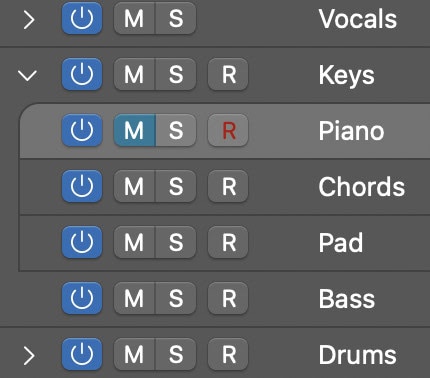
While you try this, keep an eye on your master bus meters. You’ll often find that removing a dense pad or a conflicting guitar layer lowers your overall peak volume, but the perceived volume remains the same. You’ve just gained extra headroom for the mastering stage!
Gaining Loudness
The ultimate goal of subtractive production is a master that sounds good on streaming platforms like Spotify. When you provide a clean mix to a mastering engineer (or your own mastering chain), the limiter doesn’t have to work as hard.
A minimalist approach allows the limiter to react transparently to transients. This results in a master that sounds dynamic and powerful, instead of a flat wall of noise. The fewer elements you have, the bigger each element can sound.
A New Way Forward
A professional sound isn’t about how many tracks you can layer; it’s about how much space you can maintain. The next time your mix sounds muddy, don’t grab your EQ right away and try muting some tracks first.