

Last week, we started on our journey to get mixing, mastering, and music production clients. Today, we’ll continue my Ultimate Guide for 2026. This time, we will primarily cover inbound and outbound through social media channels. I will teach you how to use Instagram DMs to build genuine connections instead of “copy-paste spamming” and how to use content to get clients to come to you. But first, a little recap:
Getting mixing, mastering, and music production clients is not about one viral post or one lucky DM. It is about building a repeatable system that creates trust, filters out bad fits, and turns great projects into more great projects.
We need to build a strong foundation for your business before going out trying to reach customers. We need:
- An offer that artists can easily understand: who it is for, what outcome you deliver, and how the process works.
- Productized services: For example, “The Mix + Master Bundle” or “The Release-Ready Song Finishing Offer”.
- A Brand identity that attracts the right clients: a clear niche, a reliable process, and a recognizable way you communicate.
- A website that outlines your positioning and is coherent with your brand identity.
- A professional delivery system: onboarding calls, communication channels, version control, and complete major label-level deliverables.
All of these have been discussed in-depth in the previous article, which you can (re-)read here! Once you have your foundation in place, it is finally time to build your inbound and outbound strategies.
The inbound strategy that brings long-term clients
Inbound works when your online presence answers three questions in under 10 seconds:
- Is this person right for my genre and goals?
- Are they trustworthy?
- What do I do next?
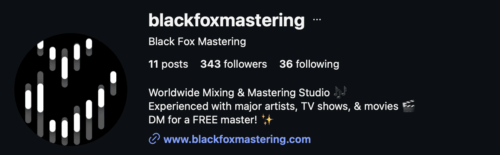
Optimize your social profiles like a sales page
Your bio is not your identity. It is your conversion tool.
Use this structure:
- One-line niche + outcome.
- Proof or credibility.
- A single call to action.
Example:
Mixing and mastering for indie rock.
Credits: [well-known label in your niche], [band name 1], [band name 2], and more!
Let’s work! ⬇️
[link]
Practical tips:
- Use one main link. If you have multiple links, use a simple landing page with one primary action (see the website section from last week’s article).
- Pin 3 pieces of content that do different jobs:
- Before and after transformation.
- Testimonial carousel or client story.
- Your process and what working with you looks like.
- In your Instagram highlights, you can add these folders with stories: Portfolio, Results (before and afters), Process (your process and what working together looks like), and an FAQ.
Content strategy: publish proof, process, and taste
Artists do not hire you because you post every day. They hire you because your taste matches their vision, your personality matches their vibe, and your process looks safe.
Build content around these pillars:
- Proof
Examples:- Before and after clips, stem comparisons, and short A/B snippets.
- Always label what changed and why it matters. Ideally, use a visual indicator when playing the before like a black and white film filter.
- Process
Examples:- What you ask for at the start of a project.
- How you handle revisions (do you have a system for it, how many do you allow, etc.).
- How you deliver files (for example, a Google Drive with a dedicated PDF file).
- Which files you include (main, clean, instrumental, karaoke version/TV mix, stems, etc.)
- What artists can expect during the project timeline.
- Taste and references
Examples:- 4 tracks that got you into your genre niche.
- Your favourite albums in your genre niche.
Please note, while it might seem tempting, don’t teach engineering on your social media! You are making content to attract artists, not fellow engineers. If you want to post educational content, don’t post “how to mix metal vocals,” instead post something that helps you and the artist to improve communication and nail the project, like “how to choose a reference track,” or “how to avoid mix notes that cost time and money.”
The outbound strategy that gets replies without being spammy
Outbound is not about messaging as many strangers as possible. It is about consistently starting high-quality conversations with people you can genuinely help.
Organisation is everything
The biggest mistake you can make when doing outbound is relying on your memory or a cluttered Instagram inbox. If you are reaching out to 20+ artists a week, you will lose track of who responded, who is currently in the studio recording, and who asked you to follow up in a month.
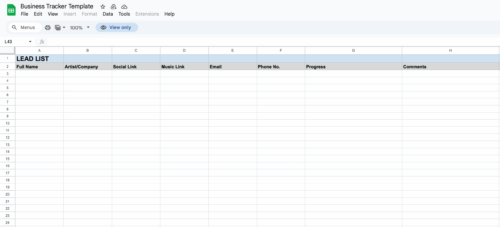
Outbound is a marathon of follow-ups. Most deals aren’t closed on the first message; they are closed on the third or fourth. To turn “random DMs” into a predictable pipeline, you need to build a simple Leads CRM (Customer Relationship Management) spreadsheet. This acts as your brain, ensuring no potential project falls through the cracks.
Your spreadsheet should include these essential columns:
- Personal Name: Use their real name, not just their stage name. It makes your outreach feel like a human connection.
- Artist Name: The project name for quick reference.
- Social Media Link: Direct link to their Instagram or TikTok profile so you can DM or engage with their latest posts easily.
- Music Link: A link to their Spotify or SoundCloud so you can reference their specific sound in your messages.
- Status/Last Contacted: Did you just follow them? Have you sent the first DM? Mark the date of your last interaction.
- Follow-up Date: This is the most important column. If an artist says, “I’m finishing vocals next week,” set a reminder to message them in 8 days.
By tracking this data, you can scale your outbound astronomical while staying on top of your interactions.
Where to find artists who are ready to buy
The easiest artists to convert are those who are actively building their careers. Here is where to find them:
- Spotify
- Look for artists in your niche with consistent releases and momentum.
- Find their Instagram and add them to the spreadsheet.
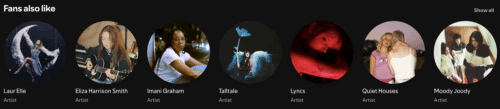
- Go through their “Fans also like” and repeat; this way, you find a lot of similar artists in your niche that you can contact later.
- Social Media
- Look for artists in your niche, engage with their content, and soon your For You page will be filled with potential leads due to the algorithm picking up on your interest in indie artists.
- Whenever you find an artist in your niche on social media, follow them and add them to the spreadsheet.
- Make sure to engage with their content so they start to recognise your name.
- Then, when they’re at the end of a release cycle (meaning they might soon have the next track ready for mixing), you reach out.
- Real Life
- Go to local shows and open mics in your niche.
- After their performances, these bands/artists usually join the crowd. That is when you can go up and talk to them. If you vibe, exchange contact information.
- When you come home, you add them to your spreadsheet and make sure to stay in contact with them.
Final Thoughts
Most engineers treat inbound and outbound as separate paths, but in reality, they feed each other. If your delivery is strong, outbound becomes easier because you can confidently offer outcomes. If your inbound assets (like your social media content, portfolio, testimonials, etc.) are strong, outbound converts faster because prospects can self-qualify if they think you’re trustworthy.
When implementing all that we’ve learned in the last two weeks, you will be well on your way to building a thriving music production or audio engineering business. But you will likely still get stuck along the way, running into roadblocks.
That’s why we are here to help you in our brand new 6-week Studio Income Intensive. Alongside video training, our team of world-class mentors will give you feedback and one-to-one support to make sure you can keep growing for years to come. Check out the intensive here!