

Producer’s block isn’t about talent, it’s about workflow. You hit a wall, start endlessly tweaking the same EQ, chasing the perfect snare, and suddenly, the project feels like a graveyard of abandoned ideas. When you get stuck, it’s easy to tweak the same knobs for hours, lose sight of the big picture, and eventually abandon the project.
Today, I’m sharing five practical workflow tips that’ll help you break this cycle, ditch perfectionism, and actually finish your tracks.
Hack 1: Create your sample palette
With millions of samples at your fingertips, it’s easy to fall into the trap of endlessly auditioning hi-hats and snares. Before you know it, two hours have vanished and you’ve got nothing to show for it. When ideas show up, the last thing you need is a sound library that’s overwhelming you. Instead of drowning in options, try this: force yourself to work with a curated palette of sounds you already love.
Practical Application:
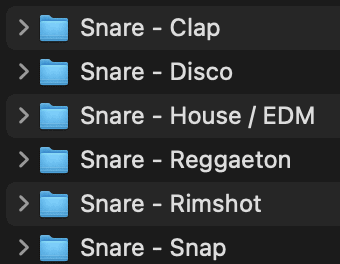
- Set aside some time to exclusively go through your sample library.
- Make a selection of samples that you think sound useful and put them in dedicated folders based on sound-type and genre.
- During production sessions, only pull samples from your favorites folder.
Hack 2: Commit to audio early on
Using MIDI instruments can be both a blessing and a curse. On one hand, it is endlessly flexible. On the other hand, that flexibility kills your creative momentum. You can tweak the filter cutoff for the 50th time, chase the perfect envelope, and suddenly, you’re stuck in an endless loop of “almost there.” Let’s get rid of that flexibility early on to keep you moving!
Practical Application:
- Write a chord progression or melody that feels musically correct.
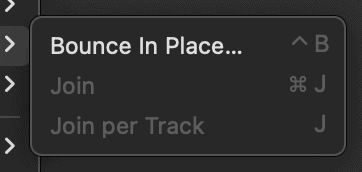
- Immediately bounce that MIDI channel down to a raw audio file.
- Delete or permanently freeze and hide the original MIDI track so you cannot easily go back and change it.
Hack 3: Map your arrangement with reference tracks
Staring at a blank arrangement grid is deeply intimidating. Professional mixing and mastering engineers rely on reference tracks to balance frequencies, but you can also use reference tracks during the production phase. Think of it as a roadmap for your song, it will show you where each section of your track should go.
Practical Application:
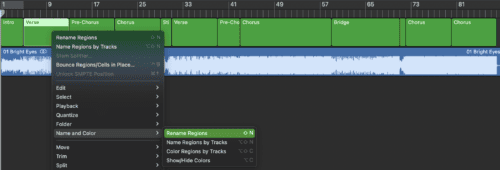
- Import a professionally produced track from a similar genre directly into your session.
- Create a blank MIDI track at the top of your arrangement window.
- Draw empty MIDI clips corresponding to the reference track sections: mark the exact lengths of the intro, verse, prechorus, drop, and outro.
Hack 4: Build your track in reverse
Most producers try to arrange a track by working from left to right. This linear approach can leads to strong intros and verses with no proper pay off. Instead of building towards the unknown, try building your heaviest and most complex section first and work your way from there.
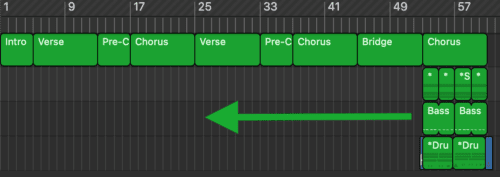
- Produce your main chorus or drop section where the energy is highest first.
- Highlight all clips in this section and duplicate this block continuously until the timeline reaches your desired track length.
- Work backwards by muting or deleting clips to carve out the buildup/pre-chorus, verse, and intro sections, using the map you created in Hack 3.
Hack 5: No mixing allowed
One of the fastest ways to derail your writing process is getting distracted by mixing details. Trying to perfectly EQ a snare drum before the second verse is even written will completely destroy your creative flow. Save the fine-tuning for later.
Practical Application:
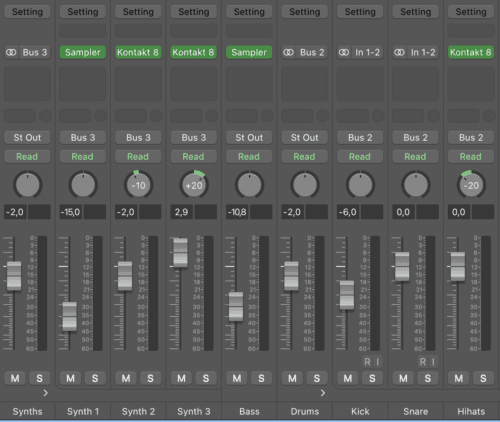
- Adjust only the volume faders and panning knobs to achieve a rough static balance.
- Refuse to touch any plugins, EQs, or compressors until the entire song arrangement is fully complete.
- When you’re ready to start mixing, export the multi-tracks and mix in a new session in order to commit to your production decisions.
Closing Takeaway:
Finishing tracks is about building reliable systems that keep you moving forward when the initial excitement fades. Try these 5 workflow hacks the next time you’re stuck and remove the friction between your initial idea and the final bounce.