

In the last article we talked about the first of our four principles of depth, volume. Today we’re getting into the second one, frequency, and how frequencies play into proximity.
Every time I think about how to explain this to students, I come back to the good ol’ lightning analogy.
When a lightning strike happens right outside your house, that first principle is true, it’ll definitely, definitely be loud. But on top of that, you hear all of the high frequency crack of that strike. It’s sharp, it’s fast, and it snaps before you can even flinch.
Now take that same lightning strike and say it happens a couple miles from your house. Not only is it significantly quieter, but you may only hear the low end thunder rumble rather than the actual crack and high frequencies of the strike itself.
That right there is a picture of how depth works out in the real world, and how we can use that same illusion of proximity with frequencies in a mix to create that pop-out book effect.
The way frequencies move through the air really comes down to how big the wave is. High frequencies are smaller oscillations of a waveform, so they move faster, snapping back and forth thousands of times per second. Every one of those moves burns off a little bit of energy as it travels through the air, so they run out of gas pretty quick. Low frequencies are very much the opposite, moving long and slow in oscillation, creating real weight behind them.
These heavier, more powerful oscillations keep pushing long after the highs are already gone. A really good way to picture it is a small pebble dropped in the middle of a lake, where you get a bunch of tiny ripples that dissipate before they travel any significant length across the water. Now drop a ten pound boulder in there instead, and you get thicker, more powerful ripples that carry much farther across the surface.
Pulling that back to audio, just knowing this is going to help us use frequency to the best of our ability when we’re creating the illusion of depth.
The low end has one more wrinkle in it, and this one is less about how the waves actually move through the air and more about how we perceive intimacy and proximity in the sounds themselves. Part of it is that low frequencies survive the trip, the same way that boulder’s ripples keep traveling. But most of it comes down to the body of the sound.
The low mids carry more of this than people give them credit for. When a sound has real body down in the low mids, you stop just hearing it and you start feeling it in your chest, and your brain reads that as something standing right in front of you. It’s the exact reason a vocal thickens up and warms the second a singer leans into the mic. Get up on a source and you pick up all of its weight. Back away from it and that weight thins out on you, even when the low end is technically still there.
So both ends of the spectrum end up telling your listener the same story. Pull the top off a sound and it reads like that thunder from a couple miles out, dark and far away. Thin out its low mids and it loses the body that made it feel like it was standing in the room with you. Bright and full sits right up front, dark and thin sits way in the back, and everything in your mix lands somewhere along that line.
If you’re anything like me, you’ve been fighting this for years without knowing the exact problem holding you back. For me it showed up in the same spot every single time, which was my backing vocals.
I always wanted my backing vocals behind the lead, right where they belong. So I used the first lever, volume, and pushed them back with the fader. But as soon as they sat where I wanted, I missed the presence. I would reach for a top end boost to add a little air and make them feel alive again.
That’s where the trap snapped shut. The brighter those backgrounds got, the more they started to steal attention from the lead. The lead felt harder to hear, so I would brighten the lead too. Then the backgrounds felt dull again, so I would lift them again. The first move created the problem, which then created a never-ending balancing act between the two, until I had a brittle, harsh top end and two vocals still fighting for the same space.
This showed up in the low mids too, especially on wide doubles, harmonies, or low octave stacks. Even when I pulled the backing vocals down with the fader, they still felt like they were reaching forward, and it was worst when the singer dropped into the lower register. The problem was simple, I almost never shaped that low mid range in the backgrounds. So the same chesty weight that made the lead feel close was also living in the stack, and those two sources started fighting for the same proximal body that made the lead feel so much more forward than anything else in the mix.
In the end, I thought I was chasing clarity and presence, but what I was actually chasing was contrasting distance, and every time I neglected the low mids and boosted the highs, I dragged those background vocals to the front of the room. My fader said back of the room while my EQ said front row, and when two moves argue like that you don’t land somewhere in the middle, you land nowhere, and the sound just floats there with no place to sit.
🎛️ Isn’t That Height? 🎛️
If you were with me last week, something should be nagging at you right about now.
Last week we opened this four part series with the Mix Cube. Instead of picturing your mix as a flat photo, you build it like a room you can move sounds around inside. Frequency stacks them high or low, panning slides them left and right, and depth pushes them out front or sits them in the back, which is the one that uses the four levers we’re talking about together, volume, frequencies, transients, and reflections. Part one was volume, where you set distance with the faders alone, louder pulling a sound toward you and quieter dropping it back.
But if frequency stacks a sound high or low, and I just told you to roll the highs off something to push it back, didn’t I also drag that sound down in the height dimension of the cube at the same time? Am I fixing depth by wrecking height?
Short answer is that you’re not, and once I started to understand this it all clicked for me and everything got a whole lot easier.
In the Height dimension of the cube, we’re more concerned about where a sound prominently lives on the frequency spectrum. Some basses carry high frequency information inside them, but most of that frequency distribution sits down in the low end and grounds the whole track from there. A cymbal flips that around. Cymbals and high frequency percussion can have low mid and mid range energy, but they primarily live up top and lift the track from up there. Height is mostly decided by sound selection, meaning the choices made in production dictate how grounded or lifted your track feels, and that limits what we can actually do to increase the height of the mix. Those choices place a part high or low long before you ever touch an EQ. Think of production as your baseline height. Mixing is like slapping on high heels, it can add a little, but it can’t change what you started with. Your production choices set the ceiling for how “tall” the mix can feel.
Now when we talk about depth, depth is much different because it’s all about contrasting two different elements. You’re not placing a sound on the spectrum, you’re measuring it against another sound’s placement in the room, and that gap between them tells your listener which one is closer.
So when you roll some top end off that cymbal to sit it behind the vocal, the cymbal doesn’t move in the height dimension. It still lives up top and it still hands your track its air. All you changed is how much of its own brightness it holds onto next to everything else around it. The vocal keeps more, so it steps forward. The cymbal keeps less, so it settles back. Both of them keep doing their job up in the height dimension the whole time.
This is that pop-out book effect I mentioned at the beginning. Every layer is a full picture on its own, and nothing got taken away, sounds just got slotted in behind the others. That’s all you’re doing here, you’re setting the spacing so your listener’s ear knows what the focal point of the mix is.
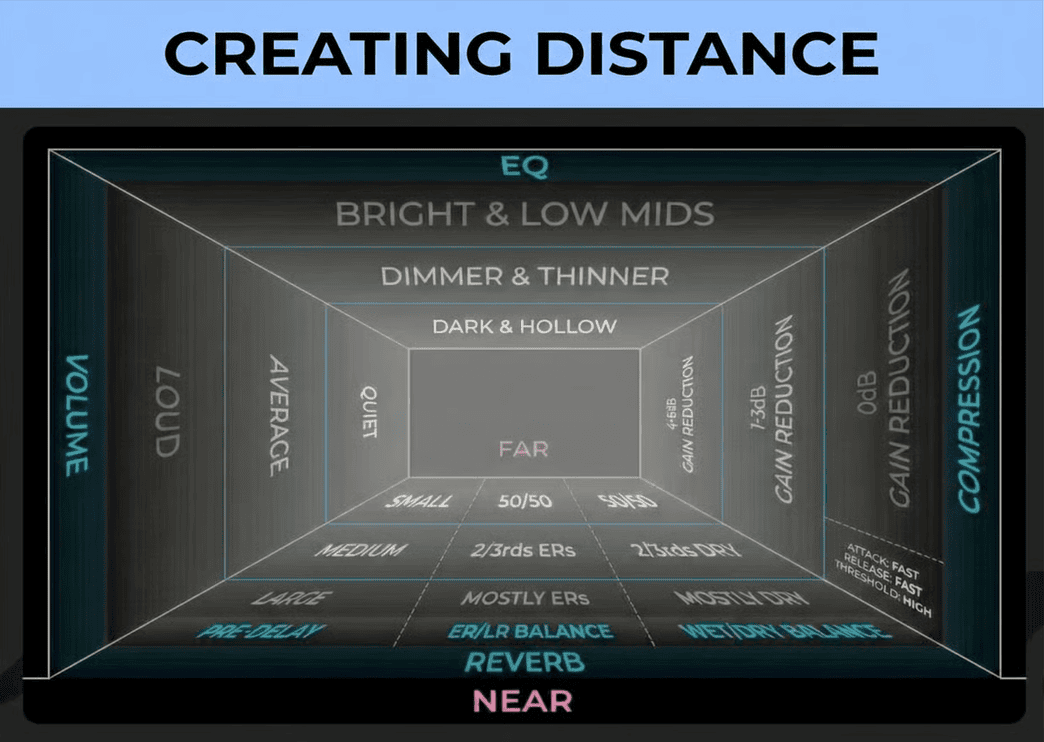
Run your eye down the EQ column on the depth map. Bright and full up front, and it darkens and hollows out as things move back. That column isn’t telling you something different than the volume column. It is repeating the same idea in a way your ear can trust. The fader says this sound is farther back and the EQ agrees by shaving off some of the shine and some of the chesty weight that makes things feel close. Now the mix is not arguing with itself. Your listener is hearing one clear story from two angles, so the brain stops questioning it and locks in the distance as something real.
🎚️ The Pass 🎚️
Start from that faders only mix from last week. You’re not rebalancing anything here, you’re backing up what the faders already told your listener.
Step 1. Grab one element you parked in the back and listen to it against whatever’s up front. Don’t solo it. Depth only exists in comparison, so a soloed track gives you no useful information. You need both of them playing to hear the gap.
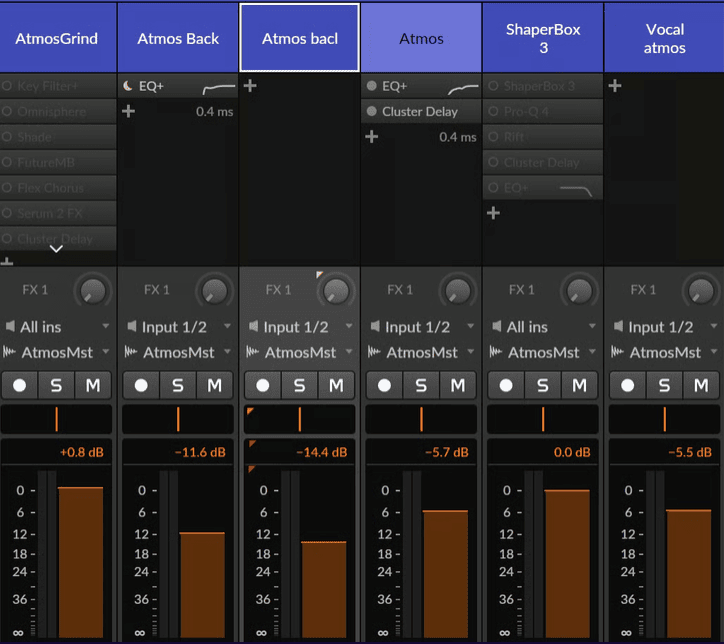
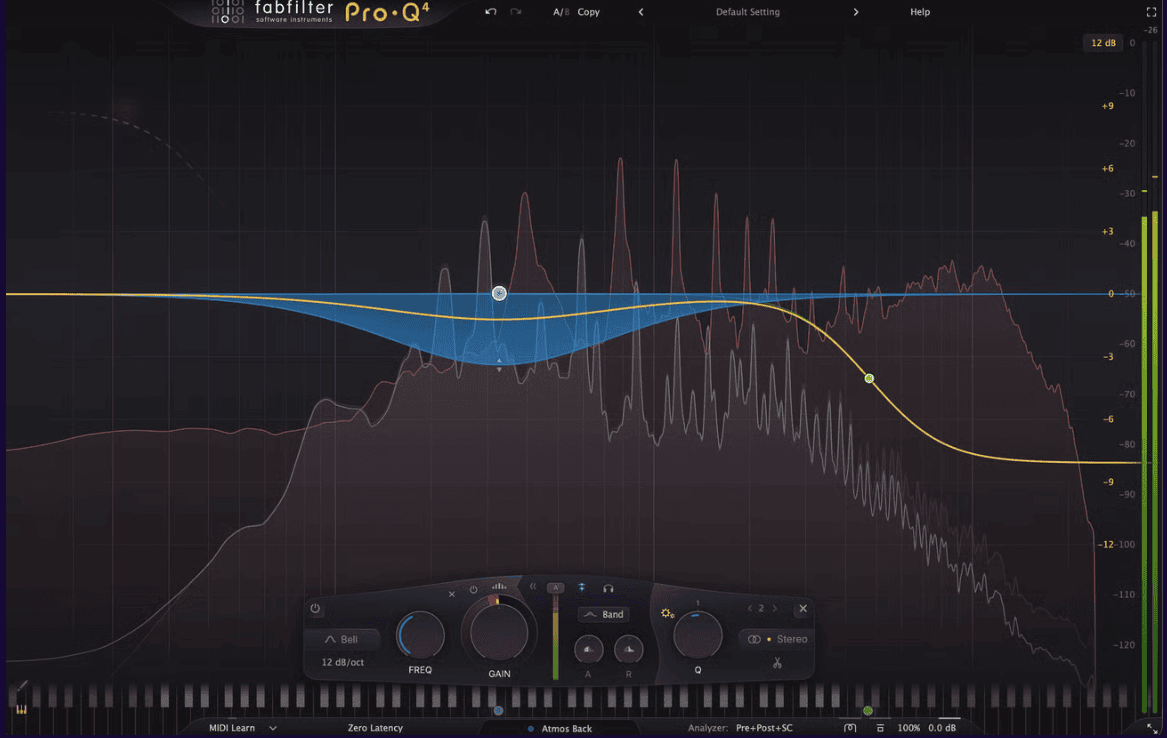
Step 2. Reach for a high cut before you reach for anything else. Drop an EQ on that background element, grab a high-shelf filter, and start subtly cutting around 8k to 10k. You’re listening for the spot where it steps back, not the spot where it goes dull. Those sit in two different places, and everything good happens in between them.
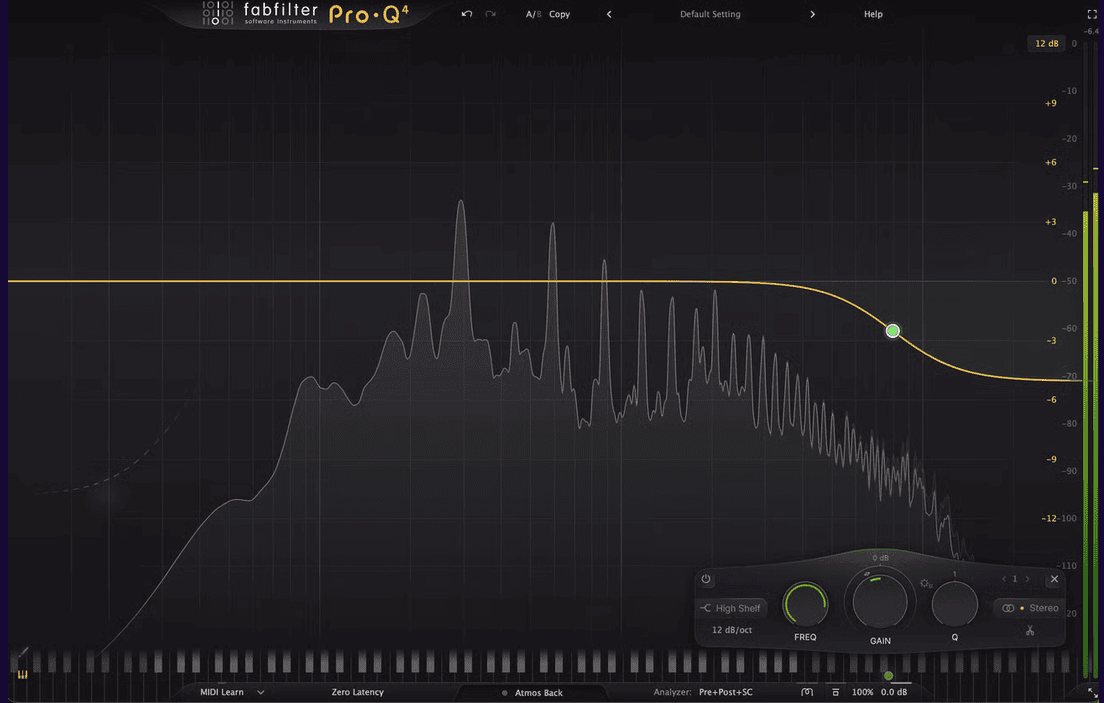
Step 3. Now pay attention to the contrast between the near zone focal point and the far zone element you eq’d. That gap between the two is your depth. If it isn’t opening up enough, keep taking from the back before you touch the front or walk the high shelf down a bit to find the frequencies that contribute most to the sound’s proximity. Pulling from the background costs you nothing. Pushing the foreground costs you the top end of your whole mix, and that’s the exact hole I dug for myself with those backing vocals for years.
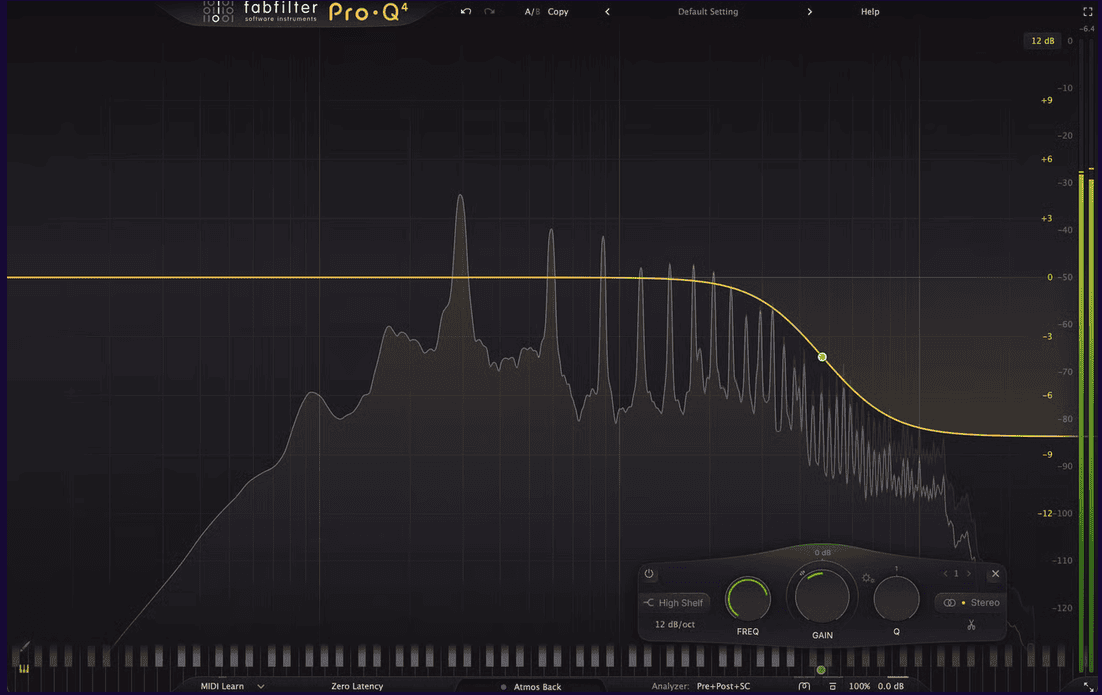
Step 4. Work the low mids with that same intention, because this is where a lot of us flip it around on ourselves. Low mid information also reads as close, so the body and the weight belong to whatever you want sitting up front. Let the front keep its low mids, and filter some 200Hz to 400Hz out of the background so it stops crowding the front from underneath. Take it to the next level by sidechaining a dynamic EQ band to the focal point (the vocal) so the low-mid information ducks only when the vocal needs the space.
Step 5. Bypass the whole chain and listen back. The space should collapse forward, everything piling onto one plane, and then open right back up when you kick it in again. If it doesn’t collapse in an obvious way and still feels flat, you didn’t move enough to matter.
Before we wrap, watch for two things. The first one is mistaking dull for distant. If you’ve filtered something dark and it still feels like it’s sitting on your chest, stop reaching for the EQ, because that’s your fader talking and not your EQ. Frequency can’t accentuate distance that volume never set, which is exactly why volume came first. Go back, set your levels, then come back and do this.
The second one is the hole I lived in for years. Don’t just chase contrast by brightening whatever’s already up front. Depth is a gap, and you can open a gap from either side, but one side is free and the other one costs you your whole top end. Take it from the back first and only brighten when necessary.
Today, open whatever session you’ve got going, pick one element that belongs behind everything else, and run a pass where the only thing you’re allowed to do is take highs and low mids away, with no boosts anywhere in the mix. See how far back you can push it with nothing but subtraction. Most of the time you’ll find you needed way less than you thought, and that the sounds you kept fighting were the ones you kept boosting.
Next week we get into transients, and we’ll come back to that lightning strike, because that crack you hear when it lands close is the third principle showing up in person.